Eye Movement Desensitization and Reprocessing

EMDR is not about reliving trauma. It’s about helping your brain understand, “That was then… and this is now.”
During the process we go slowly, check in often, and you never do anything alone.
EMDR (Eye Movement Desensitization and Reprocessing) is a therapy that helps your brain finally process and release experiences that still feel heavy, overwhelming, or “stuck.” Instead of talking in circles, EMDR works with your brain’s natural healing process. Using gentle bilateral stimulation (eye movements, tapping, or sound), we help your mind and body stop reacting like you're still in danger.
People often come to EMDR because they feel:
“Something from my past still controls me.”
“My body reacts before my brain even knows why.”
“I’m constantly on edge.”
“I don’t know why I shut down like that.”
“I learned how to survive — not how to rest.”
If any of that resonates, EMDR may be a good fit.
EMDR can be helpful for:
• Trauma & PTSD
• Childhood emotional wounds
• Chronic illness–related grief or identity changes
• Panic, anxiety, and overwhelm
• Depression tied to past experiences
• Burnout and emotional exhaustion
• Relationship triggers and attachment wounds
• Parenting and cycle-breaking work
• Feeling “stuck” or unable to move forward
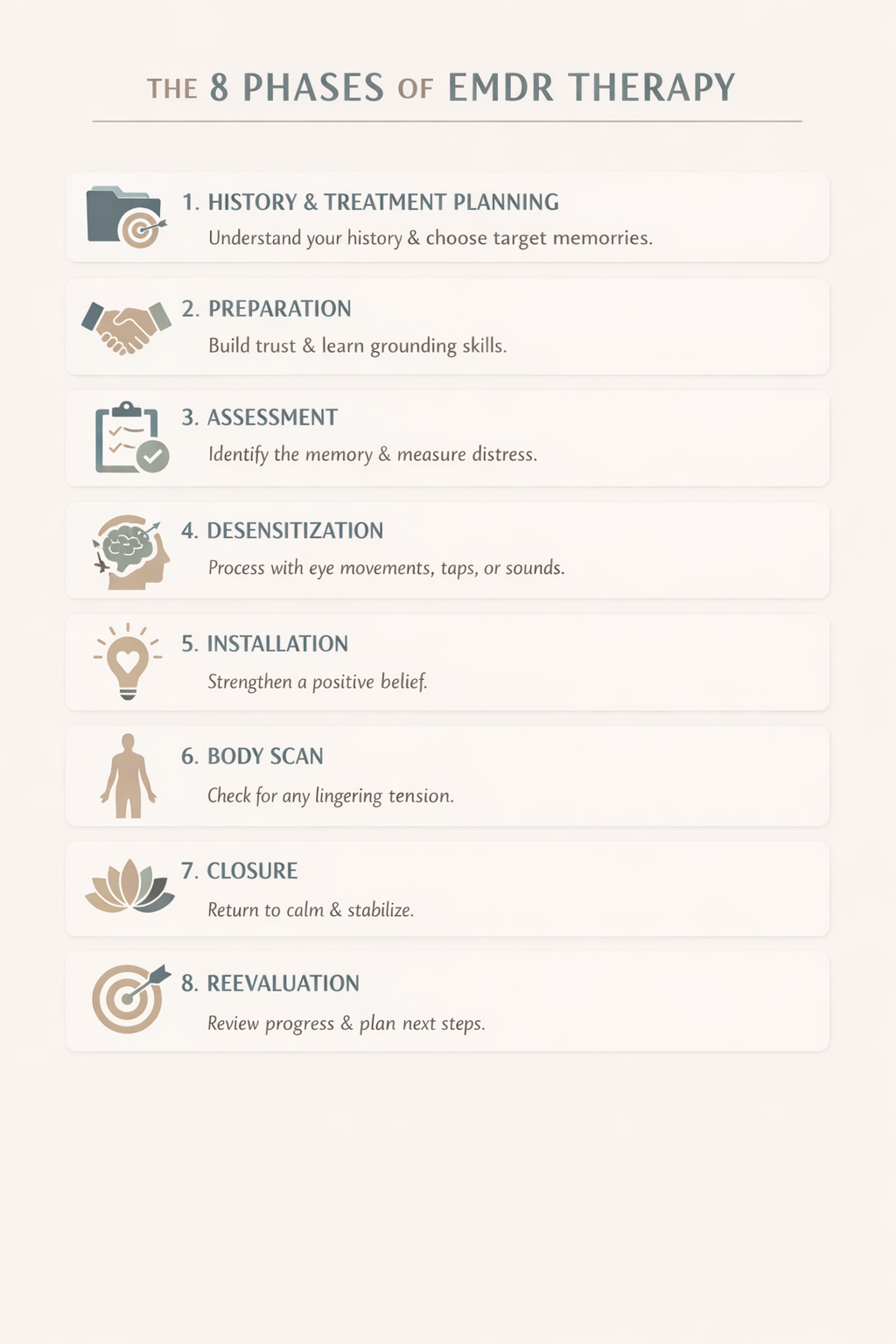
It’s important to know that EMDR is an 8-phase therapy. Before we get into reprocessing, we move through the early phases — which yes, includes a bit of paperwork — but also something essential: building resources, grounding tools, and emotional supports that help you stay steady during deeper work.
These early phases are where we:
• Understand your story and what’s impacting you
• Learn how your body responds to stress
• Build coping tools and safety anchors
• Identify the experiences we’ll target later
This foundation makes reprocessing safe, effective, and not overwhelming.